
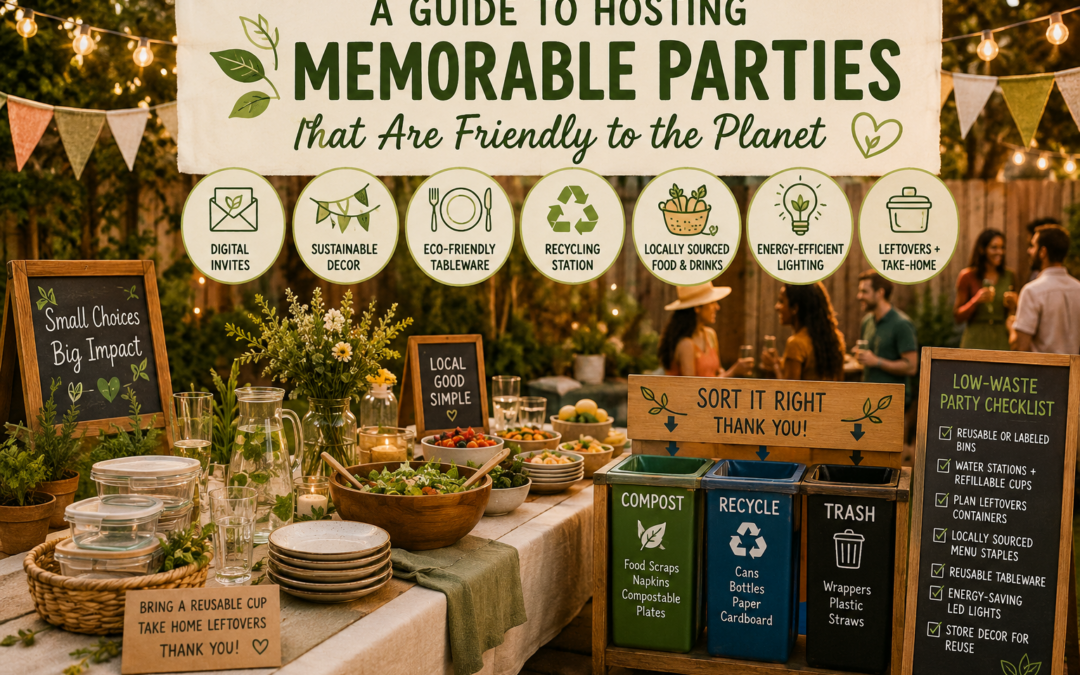
For environmentally conscious hosts planning birthdays, backyard get-togethers, and holiday dinners, eco-friendly party hosting can feel like a trade-off between values and ease. The tension is real: no one wants a pile of trash at the end of the night, but no one wants guests to feel policed or the vibe to turn into a chore. Sustainable event planning doesn’t have to be complicated or expensive, and the green celebration benefits show up fast in how the space feels, how much gets wasted, and how relaxed hosting can be. A few smart zero waste party ideas can set the tone for a celebration people actually enjoy.
Build Your Party Plan With 7 Low-Waste Upgrades
A greener party doesn’t have to feel restrictive, it can actually make hosting easier, cleaner, and more intentional. Use these low-waste upgrades to keep the vibe fun while cutting down on stuff you’ll just toss the next day.
- Start with digital invitations that do the planning for you: Use digital event communication to reduce paper consumption and keep details easy to update. Include the “need-to-knows” right in the invite: RSVP deadline, exact address (plus parking/transit tips), start/end time, and a quick “what to bring” note like a reusable cup or a labeled container for leftovers. Add one clear call-to-action (RSVP + dietary needs) so you’re not chasing people down later.
- Choose sustainable decorations that you’ll reuse (or return to nature): Pick a small color palette and build decor around items you already own, string lights, scarves as table runners, framed prints, or houseplants as centerpieces. For anything new, go for reusable cloth bunting, thrifted vases, or paper-free options like dried flowers, citrus slices, and herbs. Set a 10-minute “reset plan” before the party: designate one bin for reusing next time and one for compostables.
- Switch to eco-friendly tableware with one simple rule: Decide upfront: either real dishes or compostable basics, mixing systems creates confusion and contamination. If you have enough plates and glasses, use them and set up a visible “drop zone” by the sink (one tub for cups, one for plates) to make cleanup fast. If you must go disposable, choose compostable plates/napkins and skip plastic-lined items so they can actually be processed.
- Build a recycling station setup that guests can’t mess up: Put trash, recycling, and compost side by side in the same spot, people won’t hunt for the “right” bin across the room. Label bins with big words and 2–3 example items taped on the front (like “CANS + BOTTLES” and “FOOD SCRAPS”). Keep it near the main food/drink area, and do a quick bin check halfway through to prevent overflow.
- Plan locally sourced food and drinks that minimize packaging: Choose 1–2 “local heroes” for the menu, seasonal produce, local bread, a nearby cheese, or a regional drink, then build simple platters around them. Buy from bulk bins or farmers markets when possible and serve in big bowls and pitchers instead of individual portions. A crowd-pleaser formula: one hearty main, two sides, and one dessert, with a clearly labeled vegetarian or allergy-friendly option.
- Make energy-efficient party lighting part of the mood: Swap harsh overhead lights for warm, low-energy lighting like LEDs, string lights, or a few lamps in gathering areas. Put lights on one switch or power strip so turning everything off takes seconds when guests move outside or the party winds down. If you’re outdoors, cluster lighting around food, seating, and pathways so you’re lighting people, not empty space.
- Create a “leftovers + take-home” system before anyone arrives: Set out a stack of reusable containers you already own, or ask guests to bring one in the invite. Label a small table “TAKE SOME” with a marker and tape so people feel comfortable leaving with extras. This keeps food out of the trash and makes the end of the night feel generous instead of wasteful.
Send Digital Invites and Itineraries That Guests Actually Read
Once you’ve upgraded the on-the-day details to be low-waste, make sure guests actually know what’s happening, without printing a thing. Draft your invite or itinerary with the essentials (what, when, where, plus any key notes), keep it in a reusable file you can quickly tweak if plans shift, then send it digitally and follow up with a clean update if anything changes.
Before you share, saving the final version as a PDF helps preserve formatting across devices and makes it easy for guests to reference later. If you need to revise a PDF at the last minute, tools to edit PDFs for free let you update the document without converting it to another format.
Eco-Friendly Party Final Prep Checklist
To keep prep simple: A quick scan now can prevent a trash overflow later, since pounds of waste can add up fast at events. Use this list to lock in the fun details while keeping waste, energy, and food choices in check.
✔ Confirm reusable or clearly labeled recycling and compost bins
✔ Set out water stations and encourage refillable cups
✔ Serve crowd-pleasing portions and plan leftovers containers
✔ Choose locally sourced menu staples when possible
✔ Swap disposable plates for reusable tableware
✔ Use energy-saving LED lights and timers
✔ Store decor for reuse and skip single-use “theme” items
You’re ready to host with confidence and leave a lighter footprint.
Eco-Friendly Party Questions, Answered
Q: What if I don’t have room for separate trash, recycling, and compost?
A: Use one small “sorting station” with labeled bags or bins tucked into a corner. Put a simple sign above it showing what goes where, and place it near the food area where most waste happens. If composting is not available locally, focus on reducing packaging and keeping recycling clean and dry.
Q: How do I keep party waste from getting out of hand?
A: Events add up fast, and attendees discard waste at a surprising rate, so plan for it upfront. Choose a few low-waste swaps, then make them easy to follow with clear labels and convenient placement. A quick “last call” announcement for refills also cuts abandoned cups.
Q: Can an eco-friendly party still feel special without lots of new decor?
A: Yes, and it often feels more personal. Pick one reusable focal point like fabric bunting, a thrifted centerpiece, or a playlist plus lighting, then keep the rest simple. Invite guests to bring a plant cutting or a photo for a shared display.
Q: How do I serve food sustainably without stressing over a perfect menu?
A: Choose one crowd-pleaser, one hearty side, and a fruit or veggie option, then scale based on RSVPs. Offer a clearly labeled leftovers spot with containers or encourage guests to bring their own. When in doubt, prioritize foods that store well and reheat easily.
Q: What are a few easy resources to reduce impact without overthinking it?
A: Start with what you already have, then borrow: neighbors, family, or local “buy nothing” groups can be great for extra plates and serving trays. Libraries and community centers sometimes loan party kits or equipment too. For supplies you must buy, look for durable items you will use again.
Host Joyful Parties That Keep Waste Low and Spirits High
Wanting a fun, welcoming party can clash with the worry that celebrations automatically create a mountain of trash. The good news is that environmentally responsible entertaining is mostly a mindset: prioritize what matters, keep it simple, and plan with minimal waste in mind. When that approach guides your choices, you’ll feel real confidence in eco-friendly hosting, without losing the ease, flavor, or connection that makes gatherings memorable. A great party doesn’t need a full trash bag to prove it was a success.