
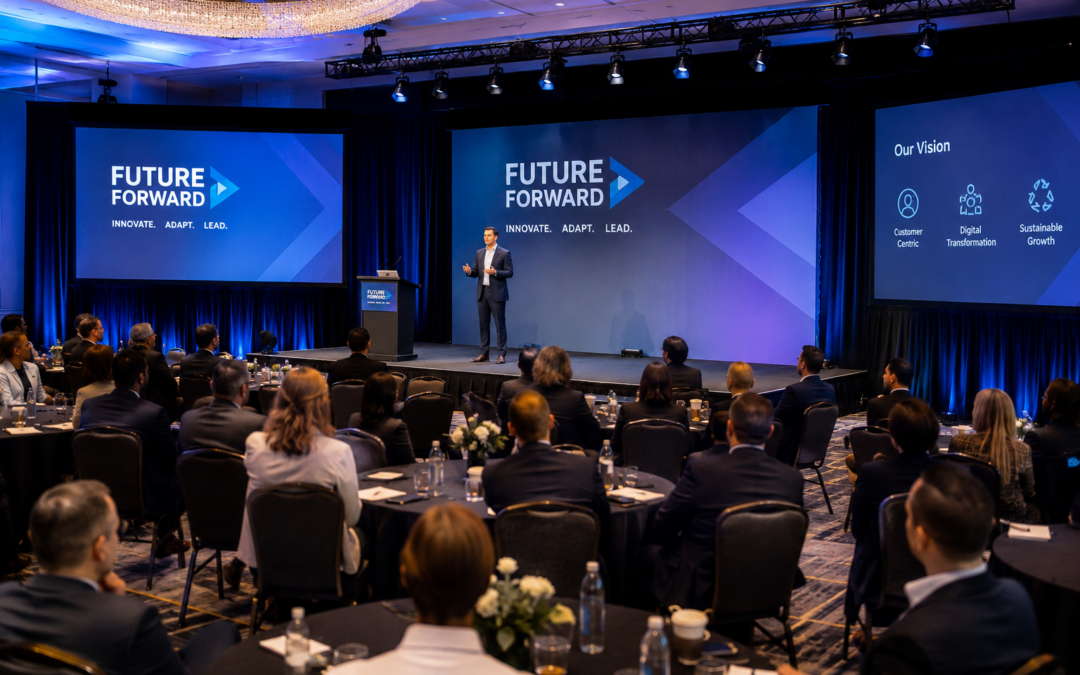
You know that weird drop-off after an event? Everyone’s energized for about 24 hours, maybe 48 if you’re lucky, and then it’s gone. Back to meetings, back to Slack, back to “what was that keynote even about again?” It’s not that the event didn’t land. It’s that nothing carried it forward. If you want your event to keep doing work for you, you have to give people something to come back to. Not more content. Better reminders.
Don’t Dump Photos — Build Moments People Can Find
Most teams take hundreds of photos and then… upload them somewhere and call it a day. That’s where things break. Nobody wants to scroll through 300 random images hoping to spot themselves or something meaningful. You’re better off breaking those into small, intentional sets. Think “client conversations,” “team wins,” “unexpected moments.” When you focus on moments that feel personal, people don’t just look once, they come back. One thing that works well is adding quick captions. Not formal ones, just context. “This was the moment X idea clicked.” Suddenly the photo means something again weeks later.
Keep Video Loose, Not Overworked
You don’t need a polished highlight reel with dramatic music and slow fades. Honestly, those get skipped. What people will watch is something that feels real. Short clips. A few messy moments. Someone laughing mid-sentence. The goal isn’t perfection, it’s recognition. People want to feel like “yeah, that’s what it felt like to be there.” Try this: ask a few attendees right after sessions, “what stuck with you?” Record it. Those off-the-cuff responses carry way more weight than a scripted voiceover.
Stop Giving Away Stuff People Throw Out
Most event swag doesn’t make it home, and if it does, it doesn’t last long. So instead of asking “what should we give people,” ask “what would they actually keep?” That shift changes everything. Maybe it’s a small printed quote from the event. Maybe it’s something tied to a shared moment. When you make keepsakes feel tied to the experience, you’re not just handing something out, you’re giving people a way to remember the experience. One trick here: let people personalize it, even just a little. That tiny bit of ownership makes it harder to toss.
Pull It All Together Into One Thing People Can Revisit
This is the part most teams skip, and it’s probably the most useful. Everything from your event ends up scattered, photos in one place, slides in another, notes buried somewhere no one wants to dig through later. If you take an hour or two to pull it all into a single recap booklet, it becomes something people will actually open again. You can layer in photos, speaker takeaways, the agenda, and even a few short reflections from your team so it feels complete without being overwhelming. Using a tool that lets you merge PDF documents fast makes this way easier than trying to design something from scratch, and you still end up with a clean, professional file you can send around. Keep it simple, keep it easy to skim, and make sure someone can flip through it in a few minutes and remember why the event mattered.
Write Like You’re Talking to Someone, Not Reporting
A lot of event recaps read like someone trying to prove the event happened. That’s not useful. What people want is a reminder of why it mattered. Focus on what stuck, not what happened in order. You can even frame it like a conversation. “Here’s what people kept coming back to.” “Here’s what surprised us.” That tone pulls people in way more than a formal breakdown. If you include a few quotes or reactions, even better. It starts to feel like something lived, not documented.
Don’t Let the Conversation Just… End
This is where most of the value gets lost. The event ends and everyone moves on. If you want it to keep working, you have to reconnect the dots. Reference it in follow-ups. Bring it into future conversations. Think continuity, not closure. One simple move is to send a follow-up that ties directly back to a moment people remember. “You mentioned this during the breakout.” That instantly reactivates the experience. It doesn’t feel like a cold message, it feels connected.
Here’s the thing. You don’t fully control what sticks with people. Sometimes it’s not the keynote. It’s a conversation in the hallway. Or a moment that felt small at the time. What you can control is whether those moments get preserved or lost.