Most people know loneliness is a problem, but few realize how quickly the right events can reverse it. Research consistently shows that people who actively participate in community events build social capital, the network of relationships, trust, and reciprocity that shapes both personal and professional life, significantly faster than those who rely on chance encounters. In a city like New York, where millions of people live in proximity but often struggle to connect meaningfully, events are not just entertainment. They are infrastructure. Nothing illustrates this better than a sold-out playoff night at Madison Square Garden, where complete strangers become a single, deafening community the moment the ball tips off.
Why Social Capital Matters More After 50
Social capital is not a fixed resource. It grows and shrinks depending on how actively you invest in it. For people in their thirties, professional networks and young-family circles tend to provide it automatically. But something shifts later.
What Does Social Capital Actually Mean?
Social capital refers to the value created by relationships: the goodwill, access, and mutual support that come from being known and trusted within a community. It is not about having many acquaintances. It is about having the right ones, built on genuine repeated contact.
Sociologist Robert Putnam, who popularized the concept, distinguished between bonding capital (deep ties with close connections) and bridging capital (weaker ties that open doors to new people and ideas). Community events, especially recurring ones, are unusually effective at building both simultaneously.
Why Milestone Birthdays Trigger a Rethink
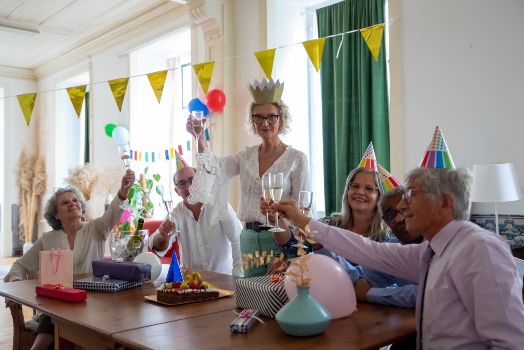
Turning fifty has a way of making people count — not candles, but relationships. Many people experience a brief wave of social anxiety at a milestone birthday gathering, suddenly aware of who is in the room, who was not invited, and whether the connections around them still reflect who they have become. That moment of mini panic is actually productive. It often motivates people to invest more deliberately in their social world. For anyone in that position, thinking carefully about the people in your life, from the friends who show up to the gestures that express how much they mean, is entirely natural, and choosing meaningful 50th birthday gifts for the people who matter most is part of that renewed investment. The real insight is that a birthday party is itself a community event, one that can either deepen existing bonds or plant seeds for new ones.
How Community Events Fast-Track Real Connections
Attending an event once rarely changes anything. The social capital gain comes from a pattern: from showing up in the same room with the same people often enough that familiarity turns into trust.
Social scientists call this the mere exposure effect: we tend to like and trust people more simply by encountering them repeatedly in low-stakes settings. A neighborhood wine tasting, a weekly trivia night, a monthly book club: none of these feel transformative in the moment. Cumulatively, they are.
What Is the Difference Between Attending and Belonging?
Belonging is what happens after you have attended enough times that people expect to see you. That shift from visitor to regular is where real social capital accumulates. It does not happen through a single great conversation. It happens through consistency. The same principle applies to any gathering: the value of an event fades fast unless something carries it forward — and for community events, that something is your continued presence.
What Types of Events Work Best?
Not all events build social capital at the same rate. The most effective ones share a few characteristics:
- They recur. Weekly or monthly events give you a natural reason to return without awkward reintroductions.
- They involve shared activity. Doing something together, cooking, playing, creating, produces faster bonding than passive attendance at a lecture or concert.
- They are small enough to allow real conversation. Events with 15–50 people tend to outperform massive galas for actual relationship-building.
- They attract a consistent core group. Turnover slows trust formation. The more regulars, the faster new arrivals are absorbed into the community.
In New York, community gardens, neighborhood sports leagues, cultural center workshops, and curated supper clubs all check these boxes consistently.
Turning One Event Into a Lasting Network
Showing up is the beginning. What you do between events determines whether your social capital compounds or stays flat.
The most connected people at any recurring event are usually not the loudest or most charismatic. They are the ones who follow through: who remember names, send a message after an interesting conversation, or suggest grabbing coffee. These small actions close the loop between an event encounter and an actual relationship.
Why Is Repetition the Secret Ingredient?
Trust is built in layers, not leaps. Each time you see someone at a community event and have even a brief, warm exchange, you add another deposit to the relationship account. Over time, that account becomes significant. People in your network begin to think of you when opportunities arise, a job lead, a referral, an invitation to something better. That is social capital working as intended.
How Do Mindful Gatherings Deepen Bonds?
Events that blend social connection with personal development, like wellness workshops, mindfulness sessions, or arts-based community programming, tend to produce unusually deep bonds quickly. Vulnerability accelerates trust. When people share something real in a structured setting, they move past surface-level acquaintance faster than at a cocktail party. Events that combine beauty, self-care, and community create exactly this kind of space, where genuine connection feels natural rather than forced.
What the Research Says About Social Events and Wellbeing
The evidence linking social connection to health outcomes is substantial. The Harvard Study of Adult Development, the longest-running study on adult happiness, found that relationship quality is the single strongest predictor of late-life health — stronger than wealth, fame, or even genetics. Good relationships protect the brain, reduce physical pain, and extend lifespan.
Community events are one of the primary mechanisms through which people maintain and grow those relationships across decades. They provide a low-friction, socially acceptable reason to be in the same room as people you might not see otherwise.
How Does NYC’s Event Culture Give You an Advantage?
New York is one of the most event-dense cities in the world. On any given week, hundreds of cultural events, neighborhood festivals, sports watch parties, gallery openings, and community meetups are happening across the five boroughs. That density is a structural advantage. Most cities require effort to find a recurring event worth attending. In New York, the challenge is choosing between them.
That abundance means New Yorkers who make deliberate choices — picking one or two communities and investing consistently — can build social capital faster than almost anywhere else. The infrastructure is already there. The only input required is showing up.
Start Building Your Network One Event at a Time
Social capital is not something that happens to you. It is something you accumulate through deliberate, repeated presence in the right rooms. Every community event you attend is an investment: small on its own, significant over time. Whether you are approaching a milestone birthday and reassessing your connections, or simply looking to build a richer social life in the city, the path forward is the same: find an event worth returning to, and return to it. New York has no shortage of options. The only move left is yours.
References: https://www.adultdevelopmentstudy.org/