
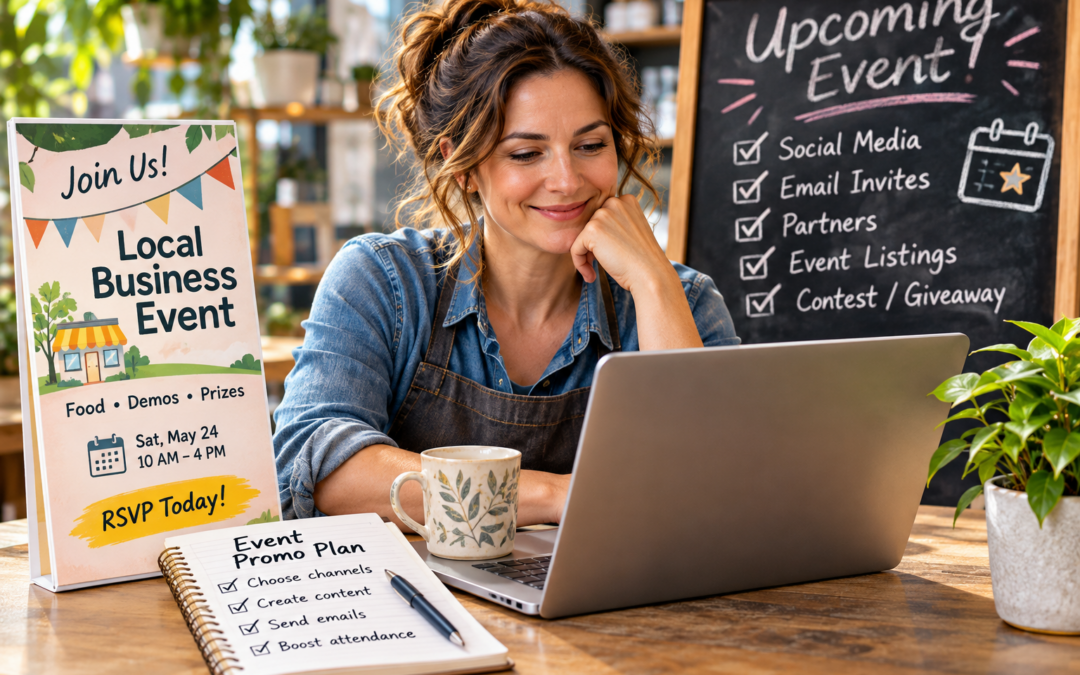
Small business owners planning a local event often hit the same wall: there’s excitement to build, but there’s also a limited marketing budget that can’t carry pricey campaigns. Budget event promotion can feel like a guessing game when every dollar has a job to do and turnout is never guaranteed. The good news is that local event marketing doesn’t have to rely on big spending to be effective. With a clear focus and cost-effective advertising choices that stay in the business owner’s control, event promotion can feel manageable and purposeful.
Quick Takeaways for Budget Event Promotion
- Use social media marketing to share event details and build momentum without extra spend.
- Use email invitations to reach your contacts directly with clear, timely event updates.
- Use cross-promotion strategies to team up with partners and expand your reach.
- Use content marketing for events to educate and excite people before the big day.
- Use event listing websites and simple online contests to boost visibility and engagement fast.
Create On-Brand Event Graphics in 15 Minutes With AI
Once you’ve knocked out the quickest promo wins, strong visuals are the next fastest way to make your event feel “real” and worth showing up for. AI-generated images can help you create engaging visual content that looks polished and consistent across your event touchpoints, your website hero image, printed promotional materials like flyers or posters, and social media posts that stop the scroll. Instead of starting from scratch (or waiting on a designer), you can use a text-to-image tool like the AI Image Generator by Adobe Firefly, which streamlines the process of creating event announcements both online and offline.
Turn Your Event Into RSVPs With a Simple Budget Plan
This quick process helps you promote your event with focus, not frenzy, so you reach the right people across a few channels without spending much.
- Choose your “home base” and top two channels
Start with one place where all details live, like a simple landing page, a pinned post, or an event page that you can update fast. Then pick only two promo channels to prioritize so you stay consistent, ideally the platforms you know they’re most likely to use. This keeps your energy on repeat visibility instead of scattered posting. - Write one message, then reshape it for each platform
Draft a short core blurb: who it’s for, the benefit, time and place, and one clear action like RSVP or buy tickets. Convert it into three formats you can reuse: a short post, a longer caption, and a simple story script. Reuse your best visual as the “signature look” so people recognize it instantly. - Run a small, targeted email sequence
Send three emails: announce, remind, and last call, each with one main link and one clear next step. Segment lightly, such as past attendees, current customers, and local subscribers, so each group gets a line that feels personal. Keep subject lines benefit-focused, not cute, and include the key details near the top. Because email remains the #1 channel, keep email at the center while your other channels support it. - Create a low-cost attendance boost with a hybrid option
If it fits your event, offer a simple virtual seat or livestream link so people who cannot make it in person can still join. Some research suggests hybrid formats can increase attendance by up to 30%. Even a basic virtual option gives you one more reason to remind people to register.
Build Budget-Friendly Event Success With One Consistent Rhythm
Promoting an event on a tight budget can feel like shouting into the void while trying to run the rest of the business. The steady way through is a simple rhythm: a clear timeline, consistent touchpoints, and calm follow-through that keeps effective low-cost advertising and affordable event outreach from turning into last-minute chaos. With that approach, visibility grows, repeatable habits form, and small business marketing confidence starts to replace the scramble. Consistency beats a bigger budget every time.