For event marketers and sales teams working busy trade shows and community expos, the hardest part is earning attention before it disappears down the next aisle. The real event marketing challenges aren’t just foot traffic, they’re muddled messages, rushed conversations, and a sea of booths that sound the same. When sales pitch effectiveness is fuzzy and brand storytelling feels generic, event attendees tune out, customer engagement drops, and marketing impact becomes tough to prove. A clear, human narrative gives teams a way to be understood quickly and remembered after the badge scan.
Build a Booth-Ready Pitch, Plan, and Story in 7 Steps
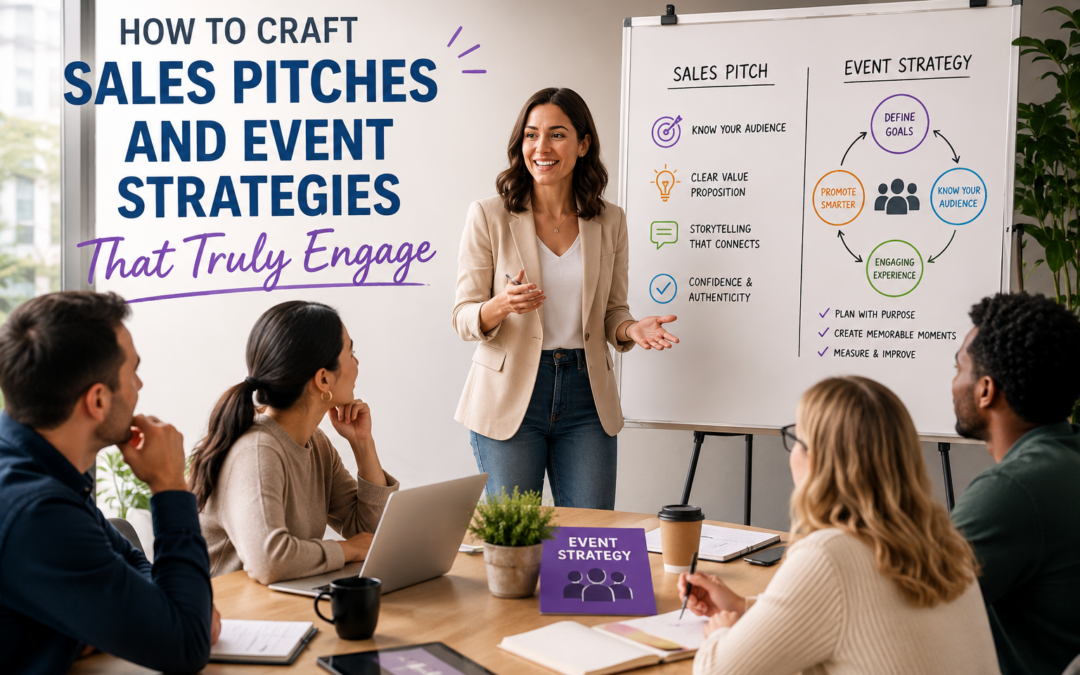
Busy show floors reward clarity. Use this 7-step method to turn your 30-second opener into a full sales pitch structure, a simple event plan, and an engaging brand narrative that people can repeat after they walk away.
- Pick one “pain point headline”: Write a single sentence that names the customer pain you solve (not your product). Keep it concrete: “Teams lose leads because follow-up gets messy,” beats “We streamline workflows.” This gives your booth staff a shared north star, and it keeps your opener from drifting into feature lists.
- Build a 3-part pitch skeleton (Problem → Help → Proof): Expand your 30-second opener into three beats: (1) the problem as attendees experience it, (2) how you help in one clear mechanism, (3) one proof point (mini case, metric, or quick demo result). This structure makes your pitch easy to scan in a loud room and easy to repeat across the team.
- Turn your story into a quick arc people can feel: Use short narrative arcs by framing a “before” moment, a turning point, and an “after” outcome. Say it like a snapshot: “Before, event leads lived in sticky notes. Then we standardized capture and follow-up. Now teams can respond within a day and stop losing hot conversations.” Stories help strangers understand value faster than explanations.
- Design one hero visual and three supporting visuals: Choose one “hero” graphic that communicates your outcome in three seconds (a bold headline + simple image). Then create three supporting visuals: a 3-step process diagram, one short customer quote, and a single results graphic or screenshot-style mockup. Keep each visual to one idea; visual marketing materials work best when they reduce speaking time, not add more reading.
- Map your booth plan to three attendee types: List the top three kinds of visitors you expect (curious browsers, problem-aware shoppers, ready-to-buy decision makers). For each, write one opening question, one micro-demo or example, and one clear next step (scan badge, book a call, grab a one-pager). This is where event marketing strategies become practical: you’re planning for real conversations, not ideal ones.
- Create a “choose-your-own” demo path (30 seconds, 2 minutes, 5 minutes): Prepare three versions of your demo with the same ending, your key outcome, so you never over-talk. The 30-second version shows the promise, the 2-minute version shows the mechanism, and the 5-minute version answers objections and shows proof. This keeps momentum even when the aisle is crowded.
- Lock consistency with a one-page message sheet: Write a one-page guide your team can memorize: your pain point headline, pitch skeleton, story arc, top 5 questions, top 5 objections with one-line responses, and your exact CTA. Protecting brand consistency matters because inconsistent brand presentation can be costly, and events magnify inconsistency fast when multiple people rotate on and off the booth.
When you can name the pain, tell the story, show it visually, and guide the next step, your booth conversations start to feel calmer and more confident, like a skill you can practice and improve, not a performance you have to “nail.”
Strengthen Your Event Messaging with Core Business Skills
Once you’ve built your booth-ready pitch and plan, it gets easier to stay clear and confident when your event decisions are backed by solid business fundamentals. Going back to school for a business degree can sharpen the business and marketing skills that support stronger messaging and more decisive planning. Earning a business management degree will help you gain skills in operations, marketing, and sales, so you can connect the dots between what you’re promising in your pitch and how you’ll deliver it. If you’re curious about what that path can look like, you can browse this page for details. Online degree programs also make it easier to keep running your business while going to school at the same time.
Sales Pitch and Event Strategy Questions, Answered
Q: How do I know if my pitch is coming off too pushy?
A: If you are talking more than you are asking, it can feel like pressure. Lead with a question about their goal, then offer one relevant benefit and a simple next step. A good rule is invite, do not insist: “Want to see a 20-second example?”
Q: What should I do when someone looks distracted at my booth?
A: Shrink the task and shorten the message. Try a one-sentence “who this is for” line, then pause so they can respond. Remember people juggle attention because many spend hours on the internet daily, so clarity beats complexity.
Q: How can I make my brand story clearer in real conversations?
A: Stick to three beats: the problem you solve, the moment it clicked for you, and the outcome you deliver. Swap jargon for one concrete example a customer would recognize. If you can say it in 15 seconds, you can expand it later.
Q: Why does “engagement” matter if I just need leads?
A: Real engagement builds trust and makes follow-up warmer. The 306% greater lifetime value tied to emotional connection is a reminder that relationships often outperform quick scripts. Aim for one meaningful exchange, not ten rushed scans.
Q: When a conversation goes off-script, how do I recover fast?
A: Validate what you heard, then choose one of two tracks: clarify or qualify. Say, “Sounds like speed matters most, is that right?” and adjust to that priority. If it is not a fit, offer a helpful resource or referral and end confidently.
Pre-Event Pitch and Booth Prep Checklist
Before you step into the room: This quick run-through keeps your message calm, your booth clear, and your follow-up easy. With 14% of marketing budgets going to event marketing, a few minutes of prep helps your time and spend land better.
✔ Confirm your audience segments and top problem you solve
✔ Draft a 15-second story with problem, turning point, outcome
✔ Practice a question-first opener that invites, not pushes
✔ Prepare one proof point and one customer testimonial snippet
✔ Review visuals for readability from six feet away
✔ Set one clear next step with a low-friction follow-up option
✔ Track two metrics: meaningful conversations and qualified next meetings
Check these off, then show up present and curious.
Build Sales Pitch Confidence Through Tailored Event Storytelling
It’s easy to walk into an event with a solid product and still feel unsure how to start real conversations without sounding scripted. The steadier path is tailored event marketing rooted in a clear brand narrative and an engagement strategies recap that matches who’s in front of the booth, not a one-size pitch. When that alignment clicks, sales pitch confidence rises, the event marketing reflection feels calmer, and customer connection becomes more natural. A strong pitch is simply a clear story told to the right person.